Why Does a Negative Times a Negative Make a Positive? | KS3 Maths
Why a negative times a negative is positive, shown two ways: the times-table pattern and turning around on a number line. Plus the rules for × and ÷.
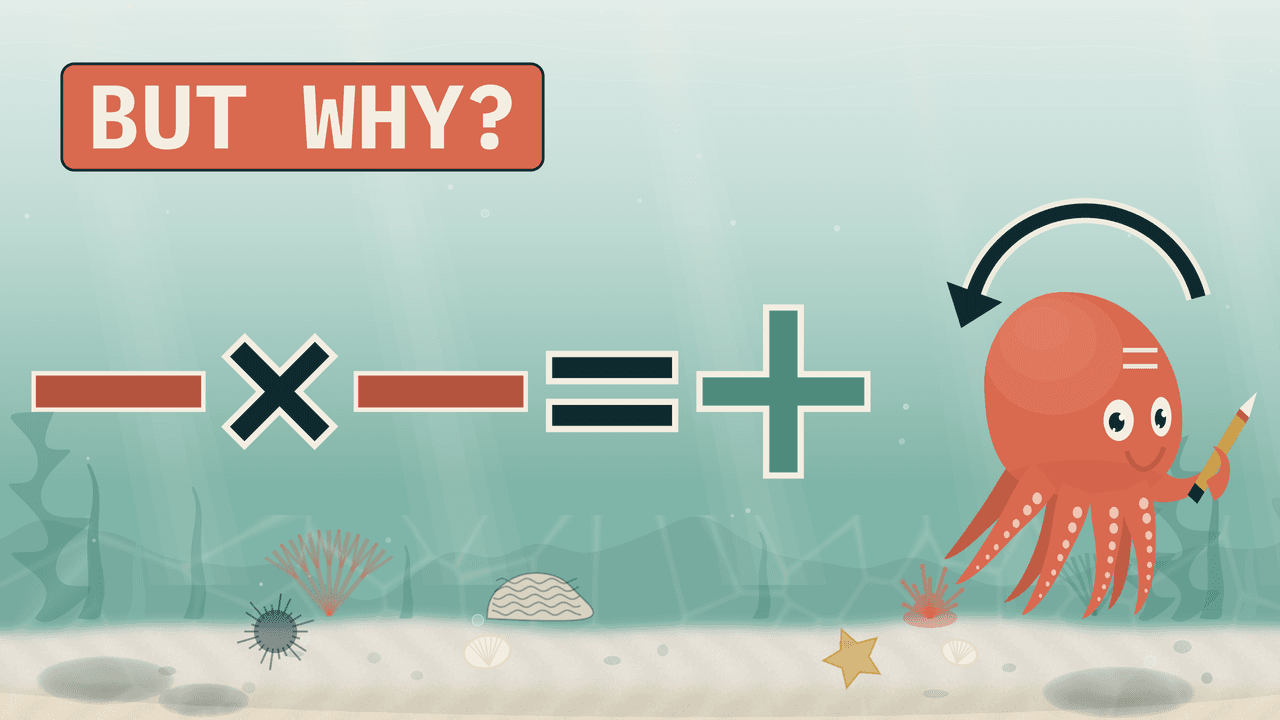
−3 × −4 = +12. A negative sign means turn around, and turning around twice leaves you facing the way you started, so two negatives make a positive.
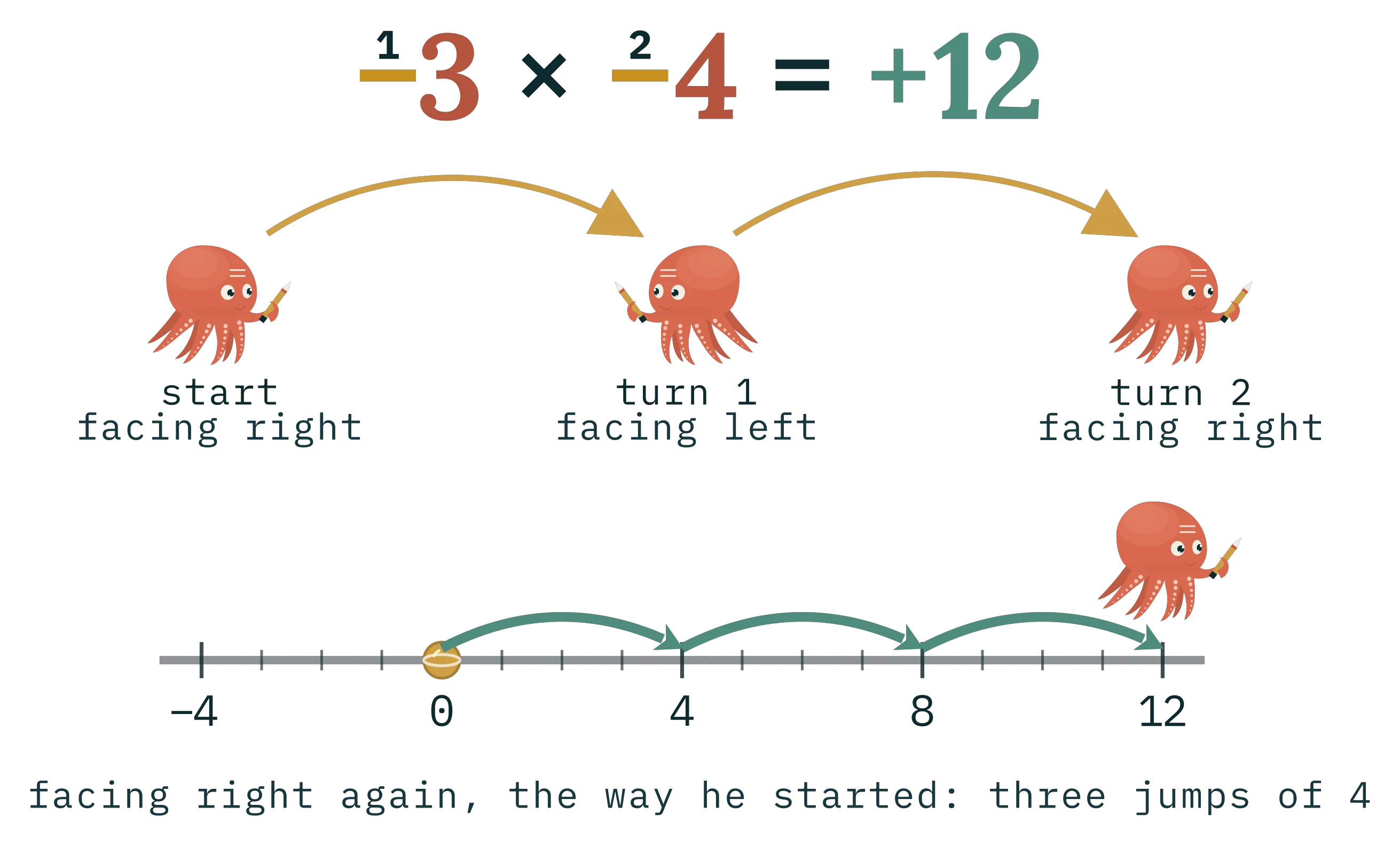
Multiplying is jumping along a number line, and a negative sign means turn around. So is three jumps of four with two turns first: the first turn leaves you facing left, the second leaves you facing right, the way you started. The jumps land on . A times-table pattern gives exactly the same answer, which is how you know it is right.
Why does a negative times a negative make a positive?
A negative times a negative makes a positive because each negative sign turns you around, and two turns put you back facing the way you started. There are two separate ways to see it, and they agree.
Worked example
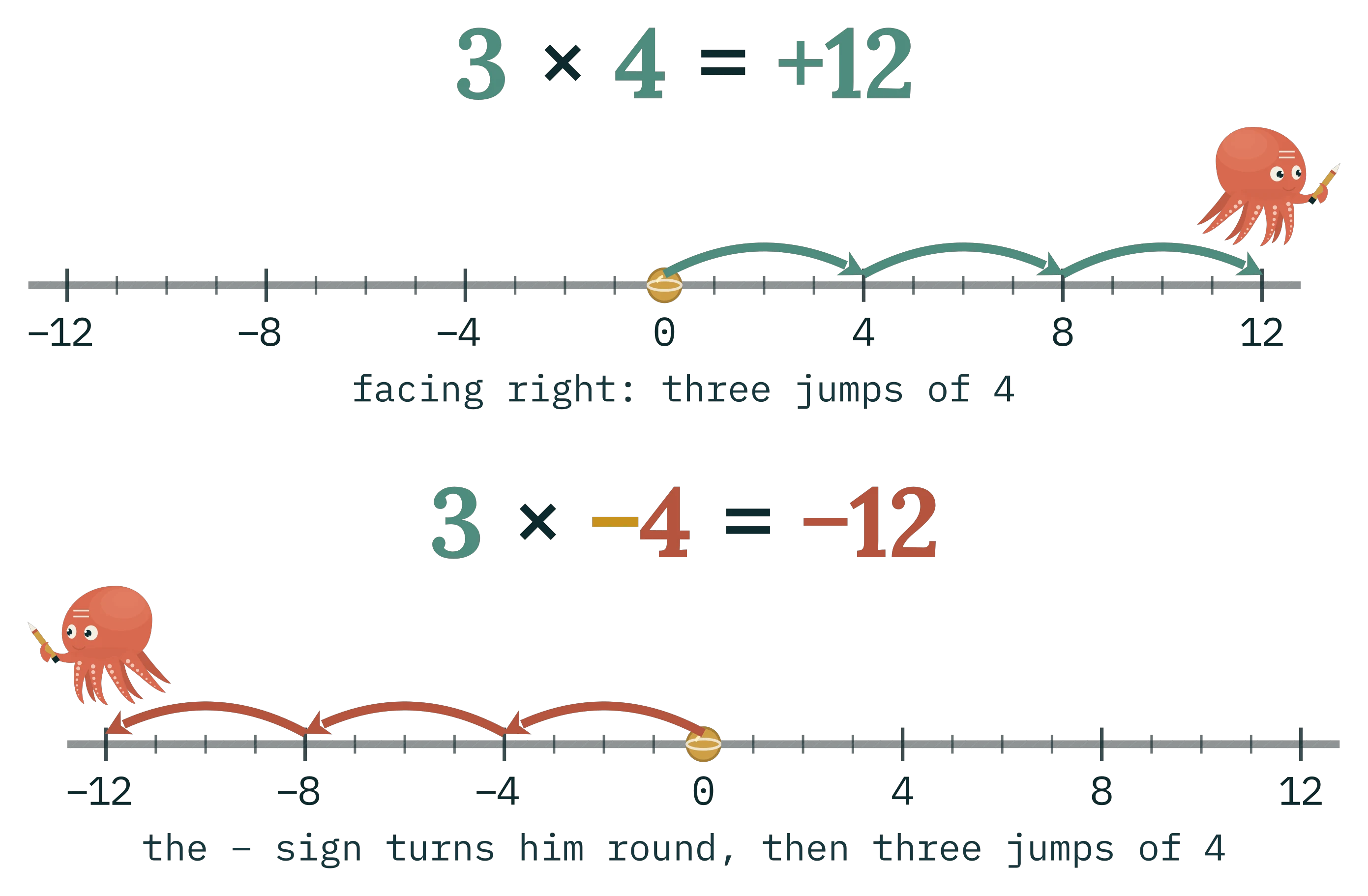
What does 3 × 4 mean on a number line? And 3 × −4?
Start at zero, facing right. means three jumps of four: , , .
In it is still three jumps, but each jump is negative four. A negative sign tells you to do one thing: turn around. Now facing left, the same three jumps of four land on .
Reason one: what does the pattern say?
Worked example
Why does the times table for −4 carry on into the positives?
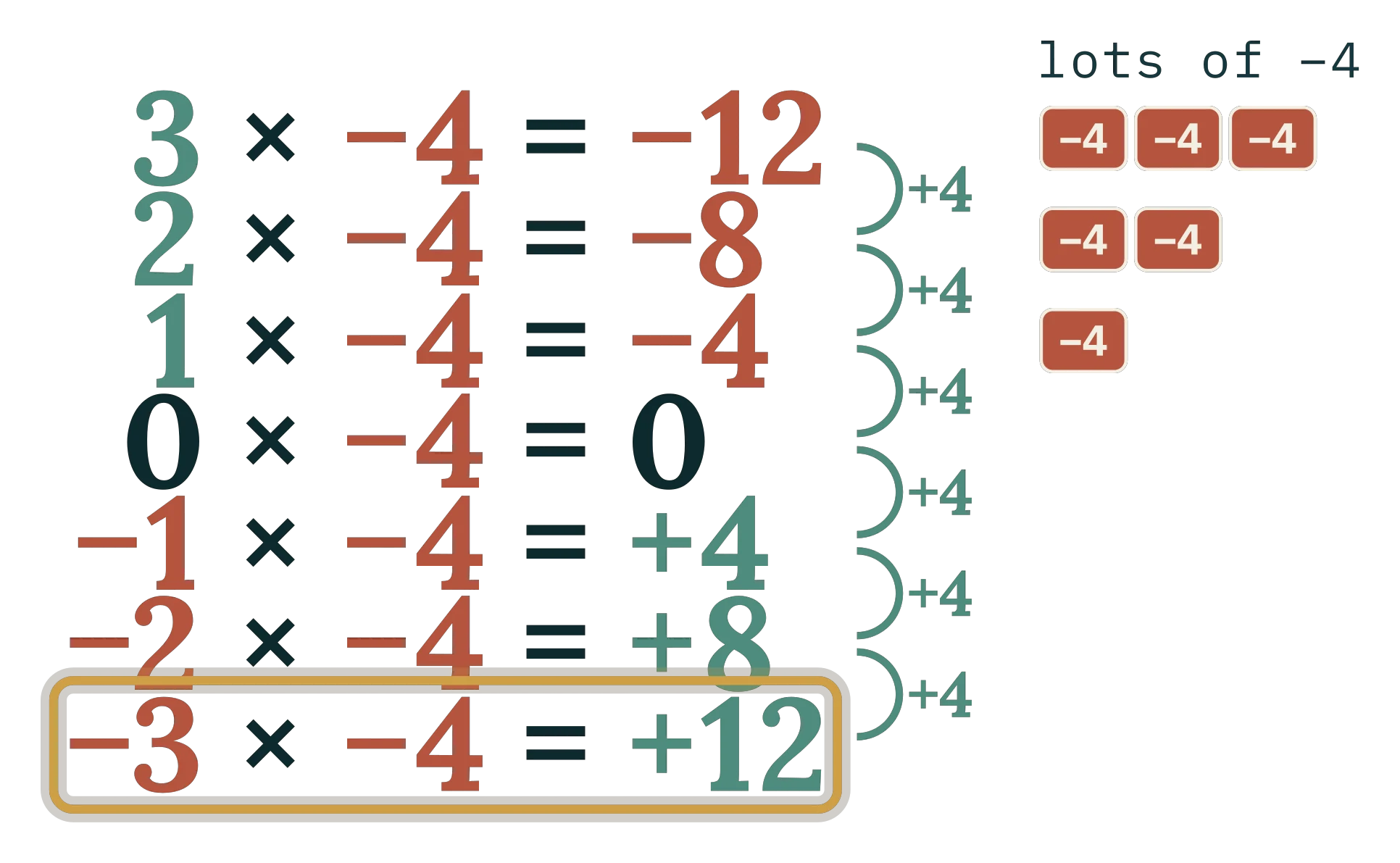
Write out the times table for , starting with the rows you can check by counting lots of :
Every row, the answer goes up by four. That makes sense: each row has one fewer lot of in it, so the answer climbs back up by four. Keep the pattern going past zero and it has to carry on climbing:
If were negative, the pattern would suddenly break for no reason.
Reason two: what does turning around do?
Worked example
What is −3 × −4?
The negative sign on the does exactly the same job as the one on the : it turns you around. So "negative three jumps" just means three jumps, turned around. With one negative sign, is one turn and three jumps left: .
With two negative signs, turn around, then turn around again. You are facing right, the way you started, so the three jumps of four go right:
Two completely different reasons, the pattern and the turning, give the same answer.
Does dividing follow the same rules?
Worked example
What is 12 ÷ −4?
Yes. Dividing undoes multiplying, so ask: what times makes ? It is , because . The signs are different, so the answer is negative:
What about three or more negative numbers?
Worked example
What is −2 × −3 × −1?
Sign first: count the negative signs. There are three, so that is three turns, which leaves you facing left: the answer is negative. Then the size: .
An even number of negatives gives a positive; an odd number gives a negative.
Where you'll use this next
- Adding and subtracting negative numbers works differently: there, the first number is just where you start.
- Multiplying and dividing negative numbers puts these rules to work on longer chains and a real-life dividing problem.
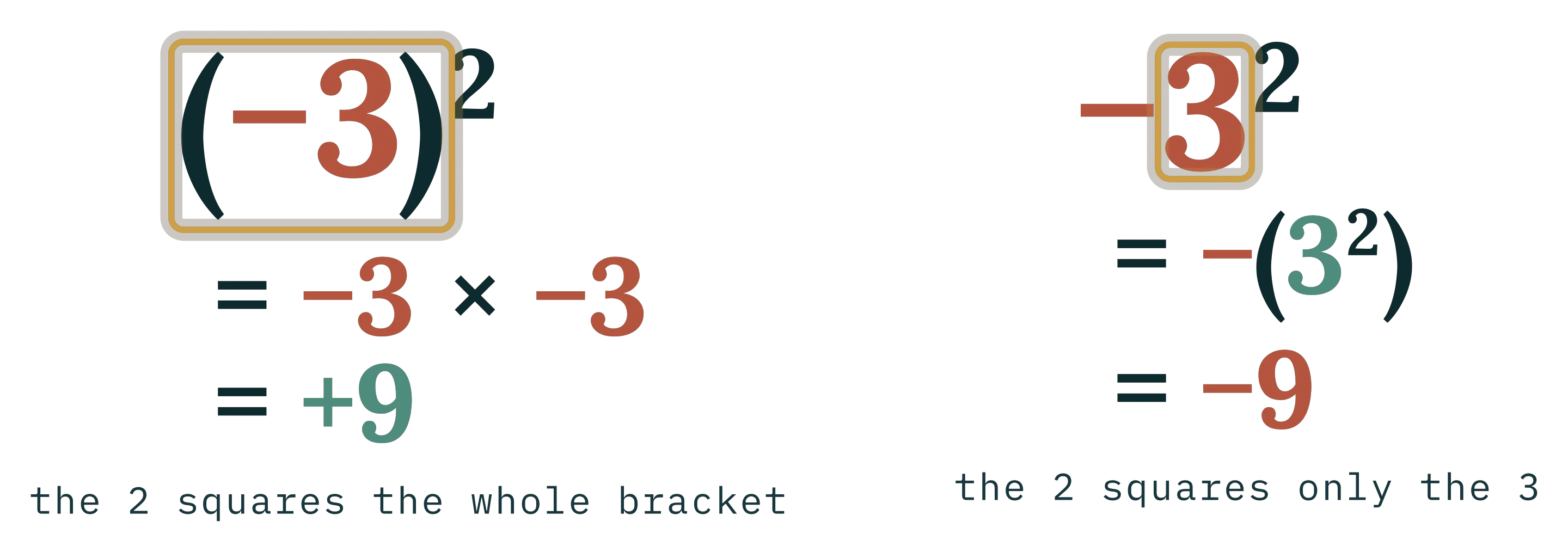
- Square and cube numbers: squaring a negative number in brackets always gives a positive, , and the order of operations explains why the brackets matter.
Practice questions
Try these, then click to check each answer. Sign first, then size.
1.Work out −7 × −3Show answerHide answer
Two negatives, so positive. , so the answer is .
2.Work out 8 × −5Show answerHide answer
One negative, so negative. , so the answer is .
3.Work out −36 ÷ 4Show answerHide answer
One negative, so negative. , so the answer is .
4.A diver sinks 5 metres every minute. Taking down as negative, where was she 4 minutes ago compared with now?Show answerHide answer
"4 minutes ago" is minutes and the rate is metres a minute, so : she was 20 metres higher, which makes sense, because she has been sinking since.
5.Work out (−2)³Show answerHide answer
That is : three negatives, so negative. , so the answer is .
6.Spot the mistake: Sam says −3 + −4 = 7, because two negatives make a positive. What went wrong?Show answerHide answer
"Two negatives make a positive" is a rule for multiplying and dividing, not adding. Adding means going four more to the left from , so .
7.Work out (−1)¹⁰⁰Show answerHide answer
That is a hundred negative ones multiplied together. A hundred is even, so the answer is positive: .
Practise this skill
A free printable worksheet with 16 questions and a full worked answer key. No sign-up needed.
Get the Number Properties Test Paper with Mark Scheme free
Ready to test the whole topic? Your first paper is on us — exam-style questions with a full plain-English mark scheme. See what’s in it.
More number properties lessons
- How to Find Factors and Multiples | KS3 Maths
- What Is a Prime Number? | KS3 Maths
- Square and Cube Roots | KS3 Maths
- Multiplying and Dividing Negative Numbers | KS3 Maths
- Square and Cube Numbers | KS3 Maths
- Adding and Subtracting Negative Numbers | KS3 Maths
- How to Use BIDMAS — Order of Operations | KS3 Maths
- Order of Operations (BIDMAS) — Is 8÷2(2+2) 1 or 16? | KS3 Maths